The Tandoor Tradition: Unlocking the Smoky, Sizzling Secrets of St Albans' Best Tandoori Food
The Tandoor Tradition: Unlocking the Smoky, Sizzling Secrets of St Albans' Best Tandoori Food
In the world of culinary equipment, few items command the same mystique and reverence as the tandoor. It is more than just an oven; it is a vessel of tradition, a crucible of flavour, and the fiery heart of our kitchen at Infuse. When you hear that unmistakable sizzle of a platter making its way to a nearby table, or when you breathe in the smoky, aromatic scent of freshly grilled kebabs, you are experiencing a culinary art form that dates back millennia.
Many people associate the tandoor solely with the iconic Tandoori Chicken. But the truth is, that legendary dish is just the beginning of the story. The tandoor is a versatile and powerful tool capable of producing a breathtaking array of succulent meats, delicate seafood, and flavour-packed vegetarian dishes. If you are on a quest to find the best tandoori food in St Albans, this guide will pull back the curtain on this ancient cooking method. We will explore its history, the science behind its magic, and the incredible variety of tandoori delights waiting for you on our menu.
What is a Tandoor? A Glimpse into the Heart of Our Kitchen
At first glance, a tandoor might seem simple. It's a large, bell-shaped or cylindrical oven, traditionally made of clay, with a thick layer of insulation around it. It is this unique construction that is the source of its incredible cooking power.
The Fuel and the Fire: Traditionally, a charcoal or wood fire is built at the bottom of the tandoor. It is left to burn for several hours until the charcoal becomes white-hot embers and the internal clay walls of the oven are completely saturated with heat. A well-managed tandoor can reach temperatures of 480°C (900°F), which is more than double the maximum heat of a standard domestic oven.
The Science of Tandoori Cooking: The magic of the tandoor comes from a trinity of heat transfer methods working in perfect harmony:
Radiant Heat: The searingly hot clay walls radiate intense, dry heat onto the food, cooking it rapidly.
Convection: The shape of the tandoor creates a natural convection current, circulating hot air and smoke around the food.
Smoke: The juices and marinades from the food drip down onto the hot charcoal below, instantly vaporising into a flavourful smoke that infuses back into the food, giving it that signature, irreplaceable smoky taste.
This combination is what creates the perfect tandoori texture: a beautifully charred, crisp exterior that locks in the juices, leaving the inside astonishingly moist and tender.
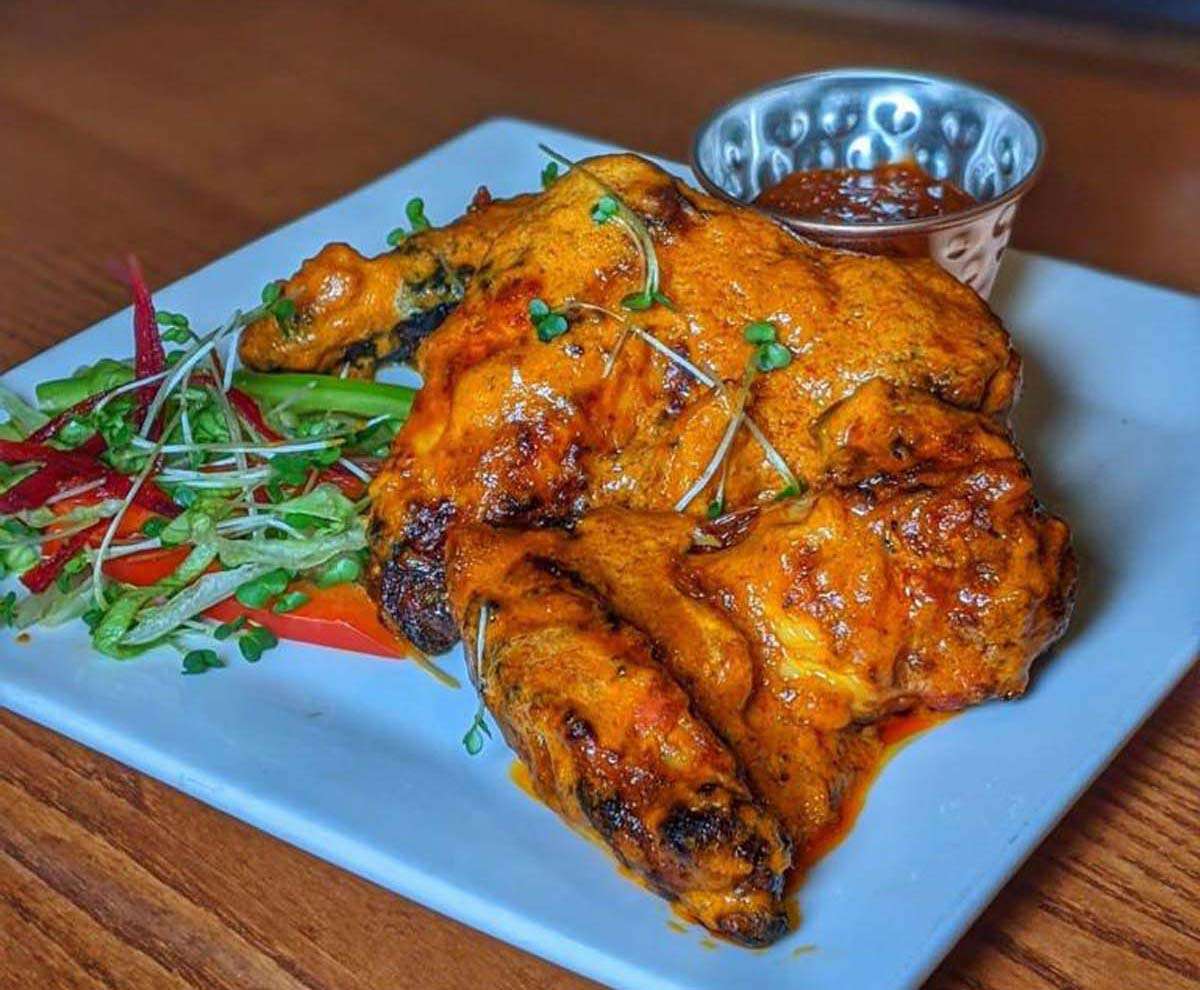
The Tandoori Flavour Profile: Marinade, Smoke, and Sizzle
The tandoor's heat is only half of the equation. The other half is the art of the marinade. Tandoori marination is a meticulous, multi-step process designed to tenderise, season, and protect the food from the intense heat of the oven.
The Art of the Marinade: A Two-Step Process
A truly authentic tandoori dish undergoes a double marination.
The First Marinade (Tenderising): The raw ingredient (be it chicken, lamb, or paneer) is first coated in a mixture of fresh lime juice, ginger-garlic paste, and spices like salt and red chilli powder. The acidity from the lime juice begins to break down the proteins, starting the tenderising process and allowing the initial layer of flavour to penetrate deeply.
The Second Marinade (Flavour & Protection): After resting, the star ingredient is coated in the main marinade. This is a thick, yoghurt-based mixture, packed with a complex blend of spices. The yoghurt is the key ingredient here; its mild acidity continues to tenderise the meat slowly and gently, while its thickness helps it cling to the food, forming a protective barrier in the tandoor. This barrier prevents the food from drying out and helps to create that beautiful, caramelised crust. Key spices include turmeric, cumin, coriander, garam masala, and Kashmiri red chilli powder, which imparts that iconic vibrant red colour without adding excessive heat.
An A-to-Z of Tandoori Delights at Infuse
Ready to explore beyond the classic? Here is a tour of the best tandoori food in St Albans, all cooked to perfection in our traditional clay oven.
Chicken Tikka & Tandoori Chicken: The Undisputed Classics
The Difference: While similar, they are distinct. Tandoori Chicken is on-the-bone chicken (usually leg and thigh pieces) that has been marinated and cooked whole. The bone adds extra flavour and moisture. Chicken Tikka consists of boneless, bite-sized chunks of chicken breast or thigh, which cook faster and have more surface area for that delicious char.
The Experience: These are the benchmark for any tandoori kitchen. The chicken arrives juicy and tender, infused with smoke and spice, a true testament to the tandoor's power.
Paneer Tikka: The Vegetarian Superstar
The Star: Paneer is a firm, fresh, non-melting Indian cheese with a mild, milky flavour. Its robust texture makes it the perfect vehicle for the tandoor, as it holds its shape beautifully and soaks up the marinade like a sponge.
The Experience: Cubes of paneer are marinated alongside chunks of onion and bell pepper before being threaded onto skewers. In the tandoor, the paneer becomes soft on the inside with crispy, charred edges, and the vegetables become sweet and smoky. It's a flavour-packed, satisfying, and completely vegetarian main course.
Lamb Chops (Barra Kebab): A Carnivore's Dream
The Indulgence: This is one of the most decadent tandoori dishes. Prime lamb chops are marinated for hours in a spiced yoghurt mix, often with the addition of raw papaya, a natural tenderiser.
The Experience: The intense heat of the tandoor renders the fat on the chops, making it incredibly crispy and flavourful, while the meat next to the bone remains pink, tender, and succulent. It's a truly luxurious experience.
Seekh Kebab: A Different Technique
The Craft: Unlike other tandoori dishes which use whole pieces of meat, the Seekh Kebab is made from finely minced lamb. The mince is mixed with a potent blend of spices, herbs like fresh mint and coriander, and binding agents, then skillfully moulded by hand onto long metal skewers ('seekhs').
The Experience: The resulting kebab is sausage-shaped, with a wonderfully soft, almost bouncy texture on the inside and a beautifully browned exterior. It's bursting with the flavour of herbs and spices.
Tandoori King Prawns (Jhinga): A Delicate Luxury
The Method: Seafood is delicate, and the tandoor's quick, intense heat is the perfect way to cook it. Large, juicy king prawns are coated in a lighter marinade so as not to overwhelm their natural sweetness.
The Experience: They cook in just a few minutes, emerging from the tandoor plump, juicy, and infused with a gentle smokiness. It's a light yet incredibly flavourful option.
The Surprising Health Benefits of Tandoori Cooking
In a world of health-conscious dining, tandoori food is a fantastic choice. The cooking method itself has several inherent benefits:
Minimal Oil: Unlike frying, very little oil or fat is needed. The cooking is done by dry heat.
Fat Renders Away: The high heat causes much of the natural fat in the meat to drip away, reducing the overall fat and calorie content.
Nutrients Locked In: The rapid cooking process helps to seal in the nutrients within the meat and vegetables.
The culinary journalists at the prestigious Food & Wine magazine have often highlighted tandoori cooking as a prime example of how flavour and health can go hand-in-hand, celebrating its ability to deliver stunning results with minimal fat.
Frequently Asked Questions about Tandoori Food
What gives tandoori food its famous red colour?Authentic recipes use natural colourings like Kashmiri red chilli powder and paprika, which have a vibrant colour but mild heat. Some restaurants use artificial food colouring, but we prefer the natural approach.
Is tandoori food spicy hot?Not necessarily. The marinade is packed with aromatic spices for flavour, not just heat. While there is a gentle warmth, tandoori food is generally considered medium-spiced, not fiery hot.
What is the difference between a tandoor and a regular BBQ grill?A BBQ cooks primarily with direct heat from below. A tandoor cooks with 360-degree radiant heat from the walls, convection from the air, and smoke, resulting in faster, more even cooking and a juicier end product.
Are tandoori dishes gluten-free?Yes, the vast majority of tandoori dishes (the marinated meat, fish, and vegetables themselves) are naturally gluten-free as no wheat flour is used in the marinade.
Experience the Fire and Flavour
The tandoor is a timeless tradition, and we are proud to be its keepers here in St Albans. It represents a commitment to authentic techniques, fresh ingredients, and the pursuit of incredible flavour. We invite you to explore our full range of tandoori dishes and discover the smoky, succulent magic for yourself.
Ready to taste the difference that only a true clay tandoor can make? To experience the best tandoori food in St Albans, book your table or order online from Infuse. Visit https://www.infuselounge.co.uk/ today!