The Complete Guide to Indian Spices: A Journey Through the Infuse St Albans Menu
The Complete Guide to Indian Spices: A Journey Through the Infuse St Albans Menu
Imagine for a moment, an artist's studio. You would see not just a canvas and a brush, but a palette bursting with a vast spectrum of colours—fiery reds, earthy browns, vibrant yellows, and deep blues. Spices are the culinary equivalent of that palette. They are the very soul of Indian cooking, the building blocks of flavour that transform simple ingredients into a symphony of taste and aroma. To truly understand the Infuse St Albans menu, is to understand the art and science of the spices that give each dish its unique character.
This is not just a list of ingredients; this is a journey into our kitchen's most prized possession: the 'masala dabba', or traditional spice box. We are pulling back the curtain to reveal the secrets of the key spices our chefs use every single day. This definitive guide will empower you to read our menu with a new level of understanding, to appreciate the complexity in your favourite curry, and to recognise the distinct notes of cumin, coriander, cardamom, and clove in every delicious bite.
The Foundation: Understanding Key Spice Terminology
Before we dive into the individual spices, let's define a few key terms that are fundamental to Indian cooking.
Masala: This is the most important word to know. 'Masala' simply means a "blend of spices." It can be a dry powder (like Garam Masala) or a wet paste (made with ginger, garlic, and onions). Every single curry has its own unique masala.
Tarka (or Tadka): This is a crucial flavouring technique. It involves frying whole or ground spices in hot oil or ghee (clarified butter) until they crackle and pop. This process, called tempering, releases the essential oils and deeply infuses the fat with their flavour. The aromatic oil is then poured over a dish, often a daal or vegetable curry, as a finishing touch, adding a powerful burst of flavour and aroma.
Whole vs. Ground Spices: Our chefs use both. Whole spices (like cinnamon sticks, cloves, and cardamom pods) are often added at the beginning of the cooking process to slowly release their flavour into the oil and the sauce. Ground spices have a more immediate, potent flavour and are used to form the main body of the curry sauce.
The Infuse Spice Glossary: An A-to-Z of Flavour
Welcome to the heart of our kitchen. Here are some of the most important spices our chefs use to create the dishes you love.
Turmeric (Haldi)
Flavour Profile: Earthy, pungent, and slightly bitter with a peppery, mustard-like aroma.
Role in Cooking: Turmeric is used as much for its magnificent golden-yellow colour as for its flavour. It forms the base of almost every savoury dish, providing a warm, earthy background note. It also has well-known antiseptic and anti-inflammatory properties.
Find it on the Infuse Menu: You'll find turmeric's golden touch in nearly everything, but its colour and flavour are particularly noticeable in dishes like Aloo Gobi (potato and cauliflower) and our fragrant Pilau Rice.
Cumin (Jeera)
Flavour Profile: Warm, nutty, and slightly peppery. When toasted, it becomes intensely aromatic and smoky.
Role in Cooking: Cumin is one of the most fundamental spices. It's used both whole (in a tarka) and ground (in the masala). Its smoky depth is essential in creating the savoury flavour base of countless curries.
Find it on the Infuse Menu: Cumin is the star in dishes like Jeera Rice, and it provides the signature smoky backbone to our Rogan Josh and Seekh Kebabs.
Coriander (Dhania)
Flavour Profile: The ground seeds are earthy, floral, and slightly sweet with a hint of citrus. The fresh leaves (cilantro) have a completely different bright, citrusy, and pungent flavour.
Role in Cooking: Ground coriander is a thickener and provides a mild, earthy base for a masala. It balances the flavours of other, more pungent spices. Fresh coriander is used as a garnish, adding a burst of freshness at the end.
Find it on the Infuse Menu: Ground coriander is a key player in our Chicken Bhuna, while fresh coriander brightens up almost every dish we serve.
Red Chilli Powder (Lal Mirch)
Flavour Profile: Primarily used for its heat, but different chillies have different flavour profiles. We use varieties like Kashmiri chilli powder, which provides a vibrant red colour with a mild heat.
Role in Cooking: This is the primary source of 'heat' in a curry. The amount used is carefully controlled by our chefs to create dishes ranging from mild to intensely hot.
Find it on the Infuse Menu: The heat of our Madras and Vindaloo comes from a generous helping of chilli powder.
Cardamom (Elaichi) - Green & Black
Flavour Profile: Green cardamom is intensely aromatic, with notes of citrus, mint, and flowers. Black cardamom is much larger, with a powerful smoky and camphor-like aroma.
Role in Cooking: Green cardamom is used in both sweet and savoury dishes and is a key component in Garam Masala and Pilau Rice. The more intense black cardamom is used for rich, rustic meat dishes.
Find it on the Infuse Menu: You'll taste the fragrance of green cardamom in our Pilau Rice and Korma. The smoky depth of black cardamom is a secret ingredient in our Lamb Rogan Josh.
Cloves (Laung)
Flavour Profile: Sweet, pungent, and aromatic with a slightly astringent, warming quality.
Role in Cooking: Cloves are incredibly potent, so they are used sparingly. They are a key component of Garam Masala and add a distinctive, perfume-like warmth to rice dishes and rich meat curries.
Find it on the Infuse Menu: The subtle, warming sweetness of cloves is essential to the authentic flavour of our Biryani and Pilau Rice.
Cinnamon / Cassia Bark (Dalchini)
Flavour Profile: Sweet, woody, and fragrant. Cassia bark, often sold as cinnamon in the UK, is more robust, while true cinnamon is more delicate.
Role in Cooking: Used whole in oil at the start of cooking, it infuses the entire dish with its sweet, woody fragrance. It's essential for rich, aromatic curries and rice dishes.
Find it on the Infuse Menu: Another star player in our Biryani, Rogan Josh, and Pilau Rice.
Fenugreek (Methi)
Flavour Profile: The seeds are slightly bitter with a hint of maple syrup. The dried leaves (Kasuri Methi) are deeply aromatic and savoury.
Role in Cooking: A small amount of fenugreek adds a unique, complex bitterness that balances rich sauces. The dried leaves are often crumbled over a dish at the end, adding an incredible aroma.
Find it on the Infuse Menu: The unique savoury aroma of Kasuri Methi is the secret finishing touch on our famous Butter Chicken and Chicken Tikka Masala.
This is just a small sample of our spice palette. For those interested in building their own knowledge, this definitive spice guide from the trusted food authority Epicurious is an excellent resource for any aspiring home cook.
The Art of the Blend: What is Garam Masala?
You will see Garam Masala listed in almost every curry recipe, but what is it?
'Garam' means 'hot' or 'warming', and 'Masala' means 'blend'. Garam Masala is a blend of finishing spices that are considered to be 'warming' according to Ayurvedic principles. Unlike other masala powders that are cooked into the sauce, Garam Masala is typically added right at the end of cooking, or sprinkled over the dish just before serving. This preserves its potent, delicate aroma.
While recipes vary from region to region and family to family, a typical Garam Masala includes spices like cinnamon, cloves, black peppercorns, cardamom, and nutmeg. Every chef has their own secret recipe, and the house Garam Masala is one of the most closely guarded secrets in any Indian kitchen, including ours!
Frequently Asked Questions about Indian Spices
What makes a curry spicy hot?
The heat in a curry comes almost exclusively from the capsaicin in chillies. The other spices like cumin and coriander provide flavour and aroma, not heat.
Why is my curry yellow/orange/red?
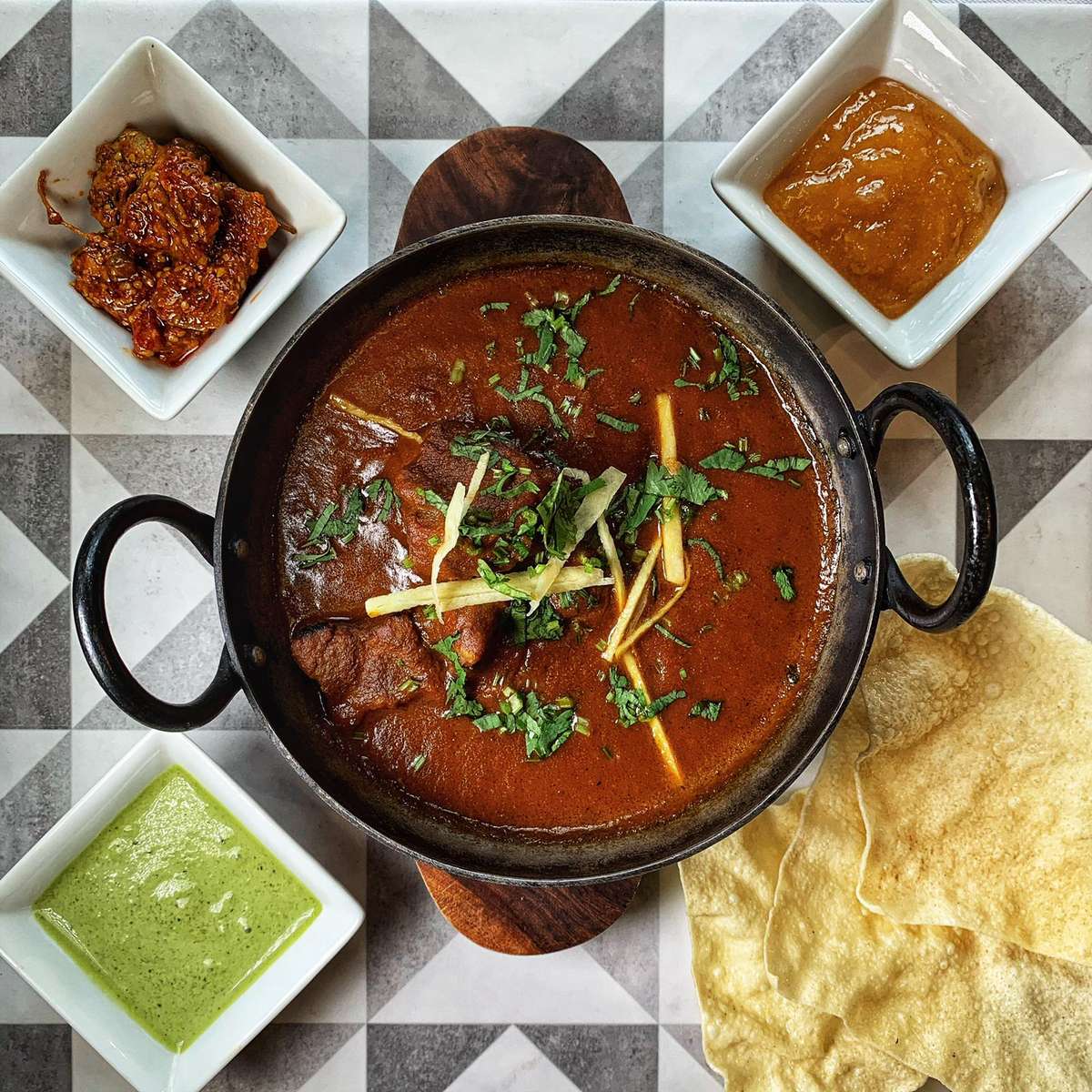
The colour comes from the spices! The vibrant yellow comes from turmeric. The rich orange in Tikka Masala comes from a combination of turmeric and red paprika/chilli powder in a creamy sauce. The deep red of a Rogan Josh comes from Kashmiri chilli powder.
Are your spices ground fresh?
Yes. For the most potent flavour and aroma, we grind many of our whole spices in-house in small batches. It makes a world of difference compared to using pre-ground powders that have been sitting on a shelf.
Are spices unhealthy?
Quite the opposite! Many spices are renowned for their health benefits. Turmeric is a powerful anti-inflammatory, ginger and fennel are great for digestion, and cumin is packed with antioxidants.
Taste the Complexity for Yourself
Every dish that leaves our kitchen is a story told through spices. It's a carefully composed balance of flavours, aromas, and textures that we have spent years perfecting. We hope this journey into our spice box gives you a newfound appreciation for the art and craft that goes into every single item on the Infuse St Albans menu.
The best way to understand is to taste. We invite you to visit us, explore our menu, and see if you can pick out the distinct notes of cardamom, the smokiness of cumin, and the warmth of cinnamon. Book your table at https://www.infuselounge.co.uk/ today!